What a forest floor taught me about building businesses
Catherine Wilder
Founder, Keystone Ecological
What if we stopped trying to build brands like machines and started cultivating them like ecosystems? Lessons from 3.8 billion years of nature's R&D.
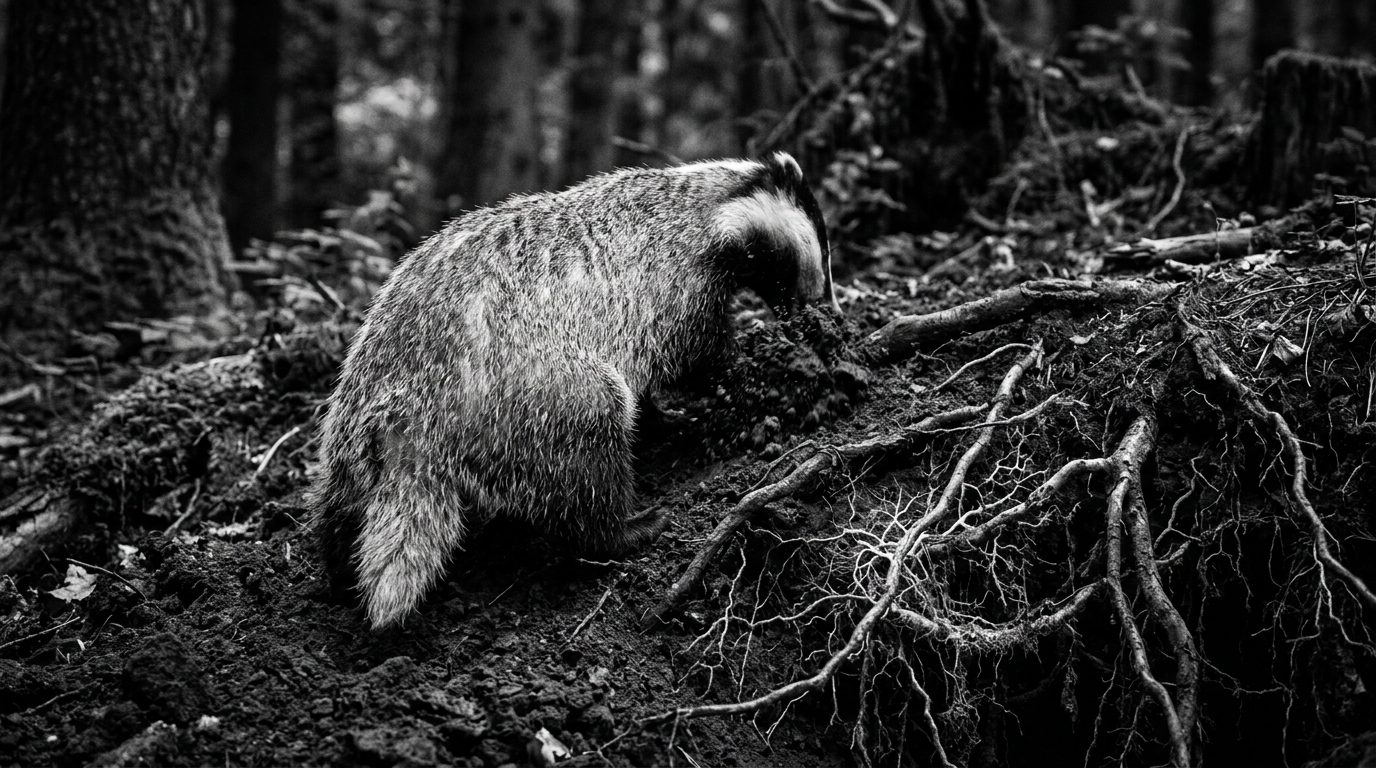
I've spent more time than most entrepreneurs I know, staring at a patch of forest floor. Where most people see a chaotic mess of decay, I see the most efficient, data-rich, and resilient enterprise on the planet. I see a system that has been beta-testing strategies for growth, resilience, and regeneration for 3.8 billion years. And it does it all without a single 100-page strategy deck, a focus group, or a blue-sky thinking session.
The greatest lessons in strategic resilience are not found in boardrooms. They are written in the collaborative language of mycelial networks, in the adaptive cycles of predator and prey, and in the resourcefulness of a pioneer species colonising bare rock. The core of my work is built on a single, obsessive thought: what if we stopped trying to build brands like machines and started cultivating them like ecosystems? What if we applied the rigorous, unsentimental, and deeply intelligent principles of ecology to the art of building a business?
This isn't about slapping a green leaf on your logo. This is about ecological intelligence. It is a completely different way of seeing, thinking, and building. It's about recognising that the patterns that create a thriving rainforest are the same patterns that can create a thriving, resilient, and purpose-driven business. It's a model I've seen work for the most impactful founders I know, and it's a model available to anyone willing to look down at the forest floor and see a blueprint for a better way to build.
What are the benefits of ecological thinking in business?
The primary benefit of ecological thinking in business is building genuine, adaptive resilience that outperforms traditional, rigid strategic models. An ecological approach provides a framework for navigating volatility, fostering innovation, and creating sustainable value because it is based on systems that have successfully weathered change for millennia. Unlike static business plans that become obsolete the moment they are printed, an ecologically-inspired strategy is alive, responsive, and designed for reality.
Traditional brand strategy, as it's often sold by agencies, is like Victorian furniture: heavy, ornate, and utterly immovable. It fixes a brand in time, delivering a polished deck that presumes the market will stand still. But the world doesn't stand still. We face constant disruption — economic, social, and environmental. A rigid strategy in a volatile world is a liability. Nature teaches us that resilience is a product of adaptation, not rigidity. Think of a coastal mangrove forest; its flexible, interwoven roots dissipate the energy of a storm surge, where a rigid sea wall would simply crack and fail. Businesses built on rigid hierarchies and fixed five-year plans are sea walls. Businesses built on ecological principles are mangrove forests.
Agencies sell us strategies like Victorian furniture: heavy, ornate, and immovable. They deliver a polished deck that fixes your brand in time. But nature teaches us that resilience is about adaptation, not rigidity.
Adopting this mindset also unlocks a more sophisticated approach to innovation. In business, we're taught to think in linear paths of cause and effect. In an ecosystem, influence happens in cascades. A trophic cascade is an ecological phenomenon triggered by the addition or removal of a top predator, resulting in dramatic changes throughout the entire ecosystem. The reintroduction of wolves to Yellowstone National Park is the classic example, an act that ultimately changed the behaviour of rivers. Applying this lens to business allows you to identify the small, high-leverage interventions that can create disproportionate, system-wide positive change. It shifts the focus from chasing every metric to understanding the one or two "keystone" actions that will stabilise and enrich your entire business ecosystem.
How can brands embody ecological principles?
Brands can embody ecological principles by moving beyond surface-level 'green' messaging and fundamentally restructuring their strategy, operations, and storytelling around patterns found in nature. This means treating your brand not as a monolithic object to be broadcast, but as a living ecosystem to be cultivated. It's a shift from manufacturing a message to stewarding a world.
First, you can map your brand's 'niche'. In ecology, a niche isn't just an animal's habitat; it's its role, its function, its unique and irreplaceable contribution to the whole system. What is your business's unique function within its market ecosystem? What would collapse if you disappeared? Answering this question with brutal honesty moves you away from competing on features and towards owning a distinct, defensible role. Your niche defines everything: who you serve, what you offer, and, crucially, what you don't do. It is the source of your strategic focus.
Second, businesses can actively design for symbiotic relationships. Nature is built on collaboration, not just competition. A mycelial network is a subterranean web connecting the roots of different plants, allowing them to share nutrients, water, and even information about threats. It is a decentralised, mutually beneficial system. What would your business look like if you prioritised building your mycelial network? This could mean deep partnerships with non-competing businesses, open-sourcing a piece of your technology, or creating platforms that enable your own customers to connect and support one another. It's a shift from a zero-sum game of market share to a positive-sum game of ecosystem health.
Finally, embodying ecological principles means embracing regeneration as a core operational goal. A forest doesn't just 'sustain' itself; it actively regenerates. The forest floor takes waste — fallen leaves, dead wood — and transforms it into fertile soil, the foundation for new life. This is the circular economy in its purest form. This is the model that directly challenges the absurdity of our global e-waste crisis, where 53 million tonnes of valuable materials are treated as 'waste' while 2.2 billion people lack access to basic computing. A truly ecological brand asks: how can our outputs become valuable inputs for another system? How can we, like the forest floor, create value from what others discard? This isn't just an ethical question; as Marco Iansiti's work at Harvard has shown, it's a profound strategic advantage.
Why is ethical branding crucial for long-term sustainability?
Ethical branding is crucial for long-term sustainability because it builds trust, the most valuable and least replaceable asset a business has, especially for purpose-driven founders. In an increasingly transparent and cynical world, trust is the fertile ground in which customer loyalty, employee engagement, and brand reputation grow. An ethical framework, rigorously applied, is what separates a truly sustainable brand from one that is simply riding a trend.
Let's be honest. The current generation of AI tools are trained on the dead weight of the internet. They can generate words that sound like a purpose statement, but they produce soul-less slop because their models lack a critical element: an ethical compass. They cannot distinguish between a deeply held value and a cynical marketing tactic. They can replicate the language of 'purpose' but cannot replicate the integrity that underpins it. This is the core of the issue. Ethics in branding aren't about a checklist of dos and don'ts; they are the lived, consistent expression of your brand's core purpose.
For a small, purpose-driven business, this is not a 'nice-to-have'. It is your competitive moat. You likely cannot compete with incumbents on price or scale, but you can win, decisively, on trust. When your brand's ethics are visible in every decision — from your supply chain to your hiring practices to how you handle customer data — you create a coherence that no amount of advertising budget can buy. This is what attracts and retains the people — customers and team members alike — who are aligned with your mission. They aren't just buying a product; they are investing their belief in your way of doing business.
This long-term view is where ethics and ecology converge. An ecosystem that pollutes its own water source will inevitably collapse. A business that erodes trust through unethical behaviour — whether it's greenwashing, exploiting labour, or contributing to that mountain of e-waste — is doing the same. It is sacrificing its long-term viability for a short-term gain. Ethical branding, then, is an act of ecological foresight. It is the practice of ensuring the long-term health of the environment your brand needs to survive: an environment of trust.
From theory to action: building your living brand
The shift from a manufactured to a living brand requires moving from static plans to dynamic systems. But there's an injustice at the heart of the branding industry that makes this incredibly difficult. I've watched too many founders with world-changing ideas get bogged down by the process. They are told branding is a dark art, a mystique that costs a fortune to access. They are sold rigid, expensive strategies that gather dust, or they are left to patch together a brand from generic advice and soul-less AI tools.
This locks out the very people whose missions we need the most. The theory of ecological intelligence is powerful, but without a way to apply it, it remains an abstraction. I realised that talking about these ideas wasn't enough. The problem, like so many of the challenges I've tackled in my career, from stripping motherboards to redesigning digital inclusion programmes, was a design challenge. The missing piece was the infrastructure — a bridge to connect founders to these powerful ideas in a way that was accessible, actionable, and affordable.
This is why I built the Keystone Brand Builder platform. It is the tool I wish I'd had. It's designed to act as that bridge, using AI not as a replacement for strategic thinking, but as a guide to unlock it. The system is built to help you find the ecological patterns in your own mission, to discover your brand's 'Wild Twin' — a species that acts as a strategic guide — and to build a coherent brand world from that deep, authentic foundation. It's my answer to the problem of inert strategy decks and empty AI-generated slop. It's the tangible expression of my entire philosophy: that world-class, ecologically-grounded brand strategy should be a right, not a luxury.
The future of business will not be determined by who can shout the loudest or grow the fastest. It will be determined by who can adapt most intelligently. The blueprints for that adaptation are all around us, in every forest, every tidal pool, every patch of resilient ground that tenaciously holds on. We just need to learn how to see them.
Share this essay